
Editor's Picks
| # | Name | Best For | Price | Rating | Image | |
|---|---|---|---|---|---|---|
| 1 | Recipe creators with video and photo content | Free | 4.4/5 |
|
More Info | |
| 2 | Multi-format recipe blogs and food businesses | Free | 4.3/5 |
|
More Info | |
| 3 | Recipe bloggers focused on speed and monetization | Free | 4.3/5 |
|
More Info | |
| 4 | Creative food photographers and recipe developers | Free | 4.0/5 |
|
More Info | |
| 5 | Food bloggers, travel food writers, and creative recipe publishers | Free | 4.5/5 |
|
More Info | |
| 6 | SEO-focused recipe bloggers and minimalist food creators | Free | 4.2/5 |
.jpg)
|
More Info | |
| 7 | Food and travel bloggers with strong social media presence | Free | 4.2/5 |
.png)
|
More Info | |
| 8 | Recipe creators who use video content and visual showcases | Free | 4.3/5 |
|
More Info | |
| 9 | Food bloggers who prioritize visual impact and social engagement | Free | 4.2/5 |
|
More Info | |
| 10 | Mobile-first recipe bloggers and minimalist food creators | Free | 4.3/5 |
|
More Info |
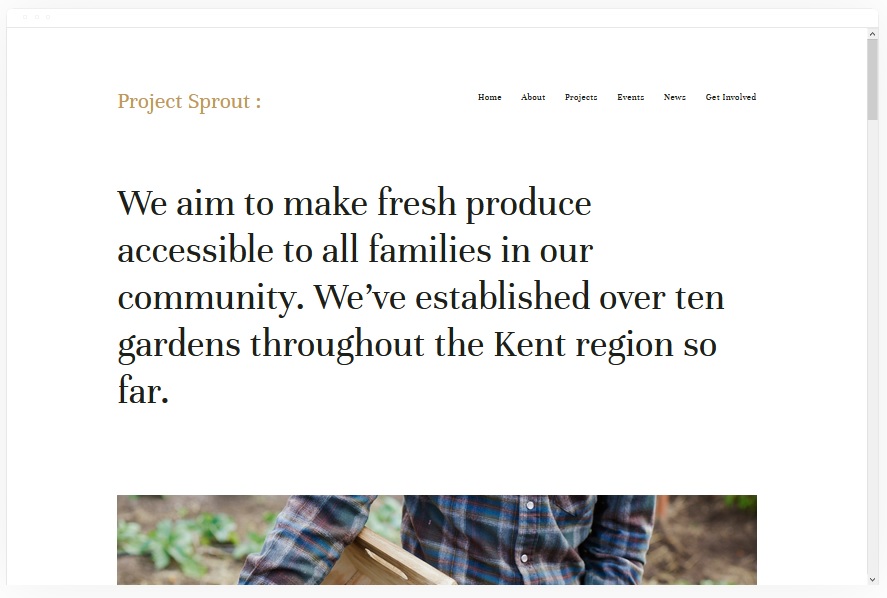
Kent
Best for Recipe Video and Photo Portfolios ✓ Pros
- Attractive, clean portfolio layout that presents recipe photos and videos with equal visual weight, ideal for creators who produce both formats.
- Cover pages, blog pages, event pages, and album pages give you flexible content types for organizing recipes by category, season, or cuisine.
- Built-in eCommerce support lets you sell cookbooks, kitchen merchandise, or branded products directly from your recipe site.
- Minimalist design keeps the focus on your food imagery without distracting backgrounds or heavy UI elements.
- Strong grid-based portfolio pages make it easy to showcase a large recipe collection in a visually organized way.
✗ Cons
- The portfolio-first layout may require extra customization if you want a traditional blog-style recipe feed with written instructions front and center.
- Limited built-in sidebar options make it harder to display recipe categories, recent posts, or email signup forms alongside content.
- The clean aesthetic depends heavily on consistent, high-quality food photography, uneven image quality will be obvious.
Kent is the pick for recipe creators who treat their food content like a visual portfolio. If you shoot recipe videos for YouTube or Instagram and need a home base that showcases that work properly, Kent delivers. The layout gives every recipe its own stage, whether it's a 60-second cooking reel or a carefully styled overhead shot. It's not the most traditional food blog template, but that's exactly what makes it stand out for creators who lead with visuals first and written instructions second.
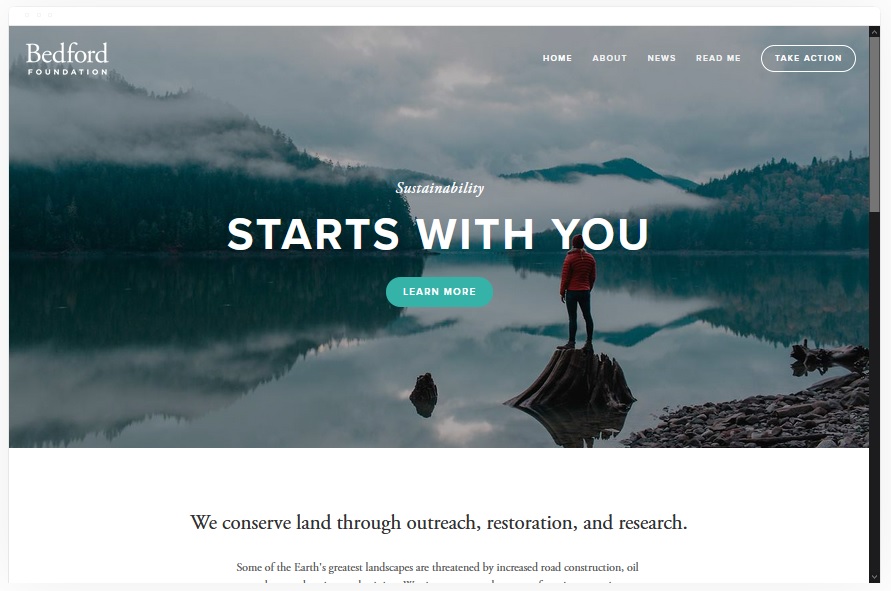
Bedford
Best for Versatile Recipe Blogs with Product Sales ✓ Pros
- Versatile layout with portfolio sections for recipe images and videos, plus built-in support for selling products and services.
- Sidebar navigation keeps your recipe categories, archives, and about section accessible without cluttering the main content area.
- Scrolling index page creates an engaging browsing experience that encourages visitors to explore your full recipe collection.
- Banner sections with calls-to-action are perfect for promoting your latest cookbook, meal plan, or email newsletter signup.
- Strong image handling ensures your food photography displays beautifully across all screen sizes and devices.
✗ Cons
- The sidebar navigation style may feel dated compared to more modern, full-width Squarespace recipe templates.
- Requires careful curation to avoid a cluttered look when displaying many recipe categories and product offerings simultaneously.
- The scrolling index can feel slow for visitors who want to jump directly to a specific recipe category.
Bedford is the Swiss army knife for recipe bloggers who do more than just post recipes. If you're selling meal plans, promoting affiliate kitchen products, building an email list, and publishing new recipes every week, Bedford gives you a place for all of it without feeling chaotic. The sidebar navigation keeps everything organized while the main content area stays focused on your food. It's the template that grows with your recipe blog as your content library and revenue streams expand.
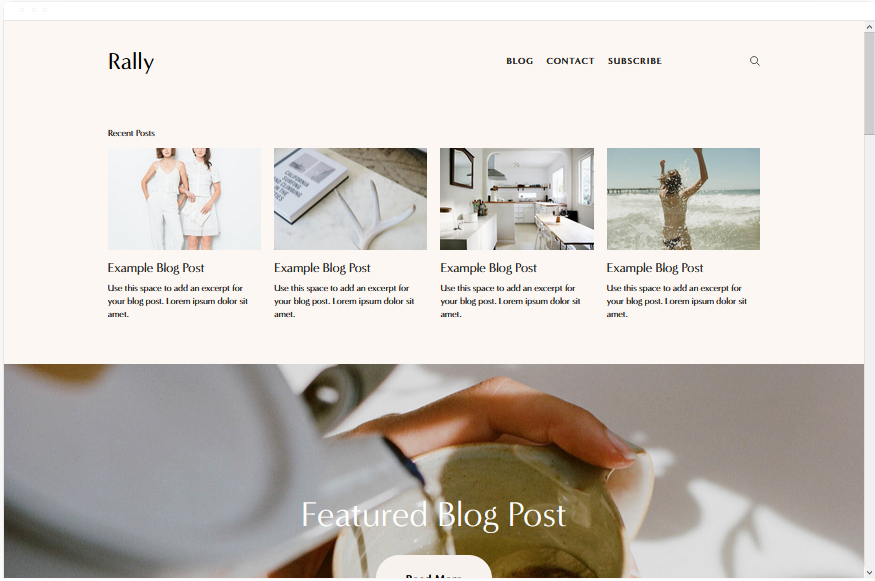
Rally
Best for Fast-Loading Recipe Blogs with Affiliate Revenue ✓ Pros
- Streamlined design with top-right menu and social media links creates a professional, modern look for food bloggers.
- Blog-first layout is purpose-built for recipe posts with large food images, written instructions, and ingredient lists.
- Smooth scrolling experience keeps readers engaged through longer recipe posts with step-by-step photos.
- Fast-loading pages on mobile devices, critical for readers following recipes in the kitchen on their phones.
- Clean structure supports affiliate links and sponsorship content without making the site feel cluttered or overly commercial.
✗ Cons
- The streamlined design offers fewer visual layout options for creators who want elaborate, magazine-style recipe presentations.
- Limited portfolio functionality compared to templates built specifically for showcasing visual work.
- The minimalist navigation may not scale well if your recipe archive grows to hundreds of posts across many categories.
Rally is built for recipe bloggers who understand that speed and readability drive traffic. If your goal is to publish consistently, rank well for recipe searches, and earn revenue through affiliate links or sponsorships, Rally strips away everything that slows that down. The blog layout handles long-form recipe posts with ease, the pages load fast on every device, and the social media integration helps drive traffic back to your site from Instagram and Pinterest. It's the template for food bloggers who treat their recipe site like a business.
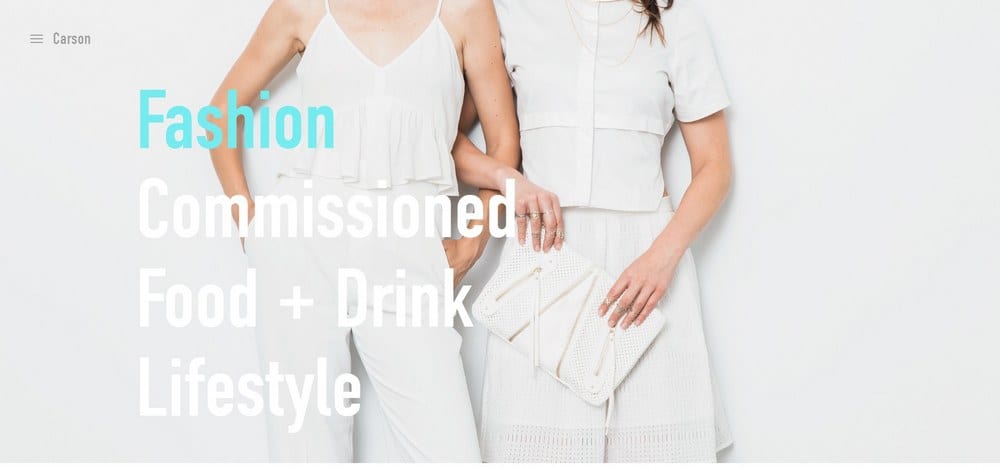
Carson
Best for Creative Recipe Showcases with Visual Impact ✓ Pros
- Unusual static page layout with background images that change on hover creates a memorable, gallery-like recipe browsing experience.
- Hidden menu keeps the interface clean and lets your food photography command the entire screen.
- Strong visual impact for promoting recipes through images and videos, each dish gets its own dramatic presentation.
- Unique navigation style makes your recipe site stand out from standard food blog designs.
- Works exceptionally well for recipe creators who present a curated, limited collection rather than a high-volume blog.
✗ Cons
- The hidden menu creates a learning curve for visitors who expect traditional food blog navigation with visible categories.
- Not ideal for large recipe archives, the static page format works better for curated collections than hundreds of posts.
- The hover-based image changes don't translate to mobile, where most recipe site traffic comes from.
Carson is for the recipe creator who thinks of each dish as a piece of art. The static page layout with changing background images turns your recipe collection into something closer to a gallery exhibition than a traditional food blog. If you're a food photographer, a cookbook author showcasing signature recipes, or a chef building a portfolio of your best work, Carson makes every recipe feel like an event. It's not the template for daily posting, it's the template for making an impression that lasts.
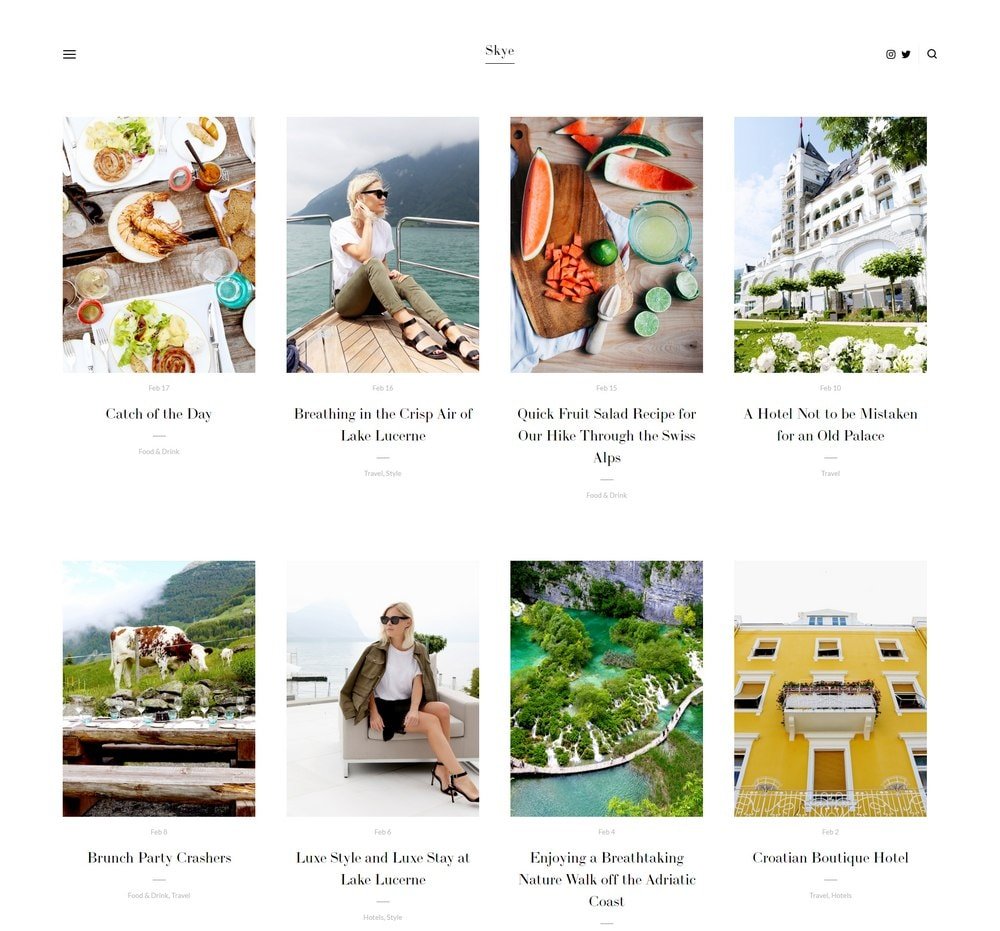
Skye
Best for Full-Screen Food Recipe Blogs ✓ Pros
- Fullscreen, grid-based layout is widely considered one of the top blogging templates on Squarespace for food recipe content.
- Slide-out left menu keeps navigation accessible without taking space away from your food photography and recipe posts.
- Super-responsive mobile design ensures recipe posts look and function perfectly on phones and tablets in the kitchen.
- Grid layout is ideal for displaying recipe archives, visitors can scan dozens of dishes at a glance and click into what catches their eye.
- Trusted by food bloggers, travel food writers, and creative content producers who need a template that handles heavy image content gracefully.
✗ Cons
- The fullscreen image approach requires consistently excellent food photography, one weak shot disrupts the entire grid.
- The grid layout prioritizes visual browsing over text-based search, which can slow down visitors looking for a specific recipe.
- Slide-out menu may feel hidden to first-time visitors who aren't familiar with the navigation pattern.
Skye is the template food bloggers keep coming back to, and for good reason. The fullscreen grid layout turns your recipe archive into a visual feast, every post thumbnail is a large, gorgeous food photo that draws readers in. The slide-out menu stays out of the way until needed, and the mobile experience is one of the best on the platform. If you're serious about building a food recipe blog that competes with the established names in food blogging, Skye gives you the foundation to do it. It's the Squarespace recipe template that food and travel bloggers trust most.
Avenue
Best for Minimalist Recipe Portfolios That Rank ✓ Pros
- Minimalist portfolio layout with grid-based design keeps the focus entirely on your recipe content and food photography.
- Fast-loading pages give you an edge in search rankings, Google rewards speed, and recipe searches are fiercely competitive.
- Clean page structure with ample space to write detailed recipe descriptions, ingredient lists, and cooking instructions.
- Grid-based archive pages let visitors browse your recipe collection visually without overwhelming navigation or sidebar clutter.
- Lightweight design translates smoothly to mobile without sacrificing readability or image quality.
✗ Cons
- The minimalist approach may feel too sparse for food bloggers who want a warm, personality-driven brand aesthetic.
- Limited built-in features for social sharing and community building compared to more feature-rich templates.
- Portfolio-style layout requires adaptation if you want a traditional recipe blog format with comments and related posts.
Avenue is the quiet overachiever. It doesn't wow you with animations or dramatic layouts, it just loads fast, looks clean, and gives your recipes room to breathe. For food bloggers who understand that search engine rankings drive the majority of recipe traffic, Avenue's lightweight design and clean code structure are a genuine advantage. Each recipe page gives you plenty of space to describe dishes in detail, list every ingredient, and walk readers through the cooking process. If your strategy is to rank high and let the recipes speak for themselves, Avenue is your Squarespace recipe template.
Native
Best for Food and Travel Recipe Blogs with Social Integration ✓ Pros
- Strong social media integration makes it easy to connect your Instagram, Pinterest, and YouTube, essential for food bloggers who drive traffic from multiple platforms.
- Scrolling page layout with rounded thumbnails creates a warm, editorial feel that suits food and travel recipe content perfectly.
- Blog location feature lets you tag recipes by origin, region, or travel destination, a unique tool for food bloggers who explore cuisines from different places.
- Engaging visual hierarchy guides readers through your recipe posts in a natural, story-driven flow.
- Works exceptionally well for food bloggers who combine recipes with travel narratives and cultural food stories.
✗ Cons
- The scrolling page format can feel long for visitors who want quick access to specific recipes without scrolling through narrative content.
- Rounded thumbnail style may not suit all food photography styles, sharp, overhead shots sometimes look better in square or rectangular frames.
- Social integration features can distract from the on-site recipe content if not balanced carefully.
Native is made for the recipe blogger whose food stories don't stop at the kitchen. If your recipes come with travel narratives, cultural context, and the story of how you discovered a dish in a market halfway around the world, Native gives that content the space it deserves. The blog location feature is a standout, you can tag each recipe with where it originated, creating a map of your culinary journey that readers can explore. Combined with seamless social media integration, Native helps food bloggers build a brand that lives across their website, Instagram, and Pinterest simultaneously.
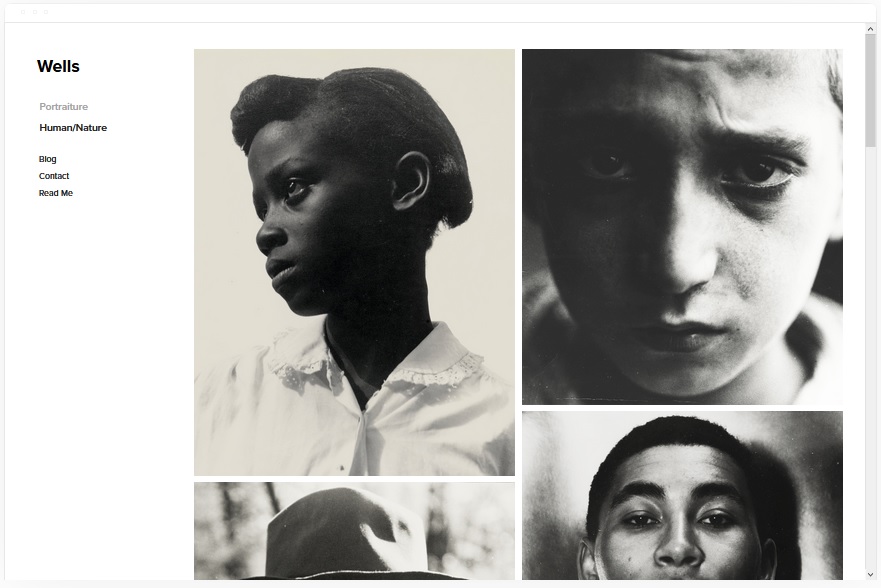
Wells
Best for Graphical Recipe Showcases with Video ✓ Pros
- Graphical layout is purpose-built for showcasing recipes with strong visual elements, photos, illustrations, and styled typography all work well.
- Easy video integration via YouTube URL lets you embed recipe videos directly into posts without any coding or third-party plugins.
- Highly customizable design adapts to different food blog aesthetics, from rustic home cooking to polished professional kitchen content.
- Social media sharing buttons and Squarespace link features help readers share your recipes across platforms instantly.
- Built-in eCommerce support means you can sell digital cookbooks, meal plans, or kitchen products alongside your recipe content.
✗ Cons
- The graphical emphasis can slow page loads if you embed multiple high-resolution images and videos on a single recipe page.
- Requires more design effort to customize than simpler templates, the flexibility comes with a steeper setup time.
- The visual density may overwhelm readers who prefer clean, text-focused recipe formats with minimal distraction.
Wells is the template for recipe creators who want their site to feel like a curated food magazine. The graphical layout handles rich visual content beautifully, styled recipe cards, embedded cooking videos, step-by-step photo sequences all look polished and intentional. If you produce recipe videos on YouTube and want a website that integrates those seamlessly alongside your written recipes, Wells makes that workflow simple. Add in eCommerce for selling your own products, and you have a Squarespace recipe template that supports a full food content business.
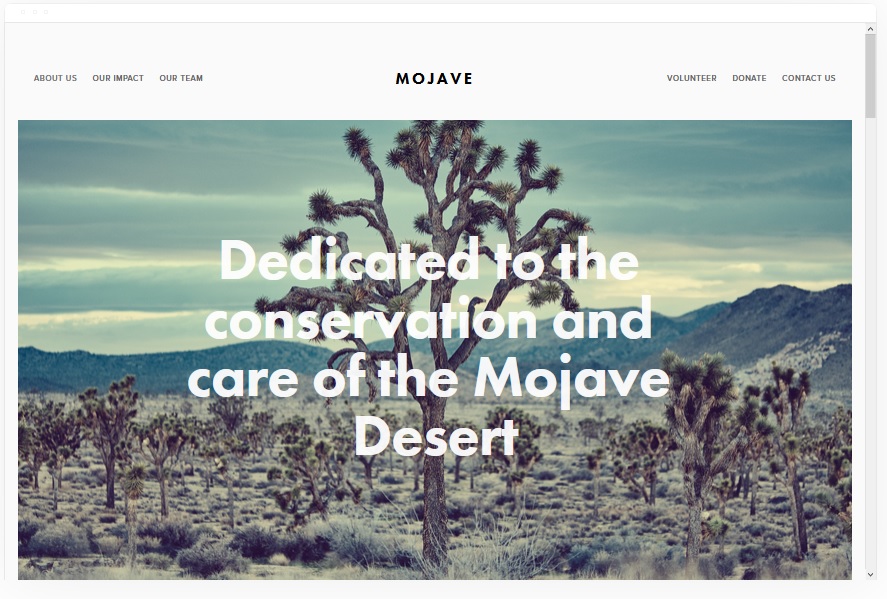
Mojave
Best for Bold Recipe Sites with Social Sharing ✓ Pros
- Striking visual appearance with scrolling effects that create a dynamic, engaging experience as visitors browse your recipe content.
- Strong call-to-action sections and banner areas with image and video support help promote featured recipes, newsletter signups, or cookbook launches.
- Built-in social media share buttons on every page make it effortless for readers to share your recipes on Pinterest, Facebook, and Instagram.
- Clean white background provides a neutral canvas that lets colorful food photography stand out without competing design elements.
- Customizable color scheme means you can adapt the white base to match any food blog brand while keeping the layout's visual impact.
✗ Cons
- The scrolling effects can feel heavy on older mobile devices, potentially slowing the experience for readers cooking in the kitchen.
- The bold visual style may overshadow your actual recipe content if you don't balance imagery with clear, readable text sections.
- Banner-heavy layout requires strong photography and design sense to avoid looking like a generic stock-photo food site.
Mojave grabs attention. The scrolling effects, bold banners, and fullscreen image sections make your recipe site feel alive and modern, like scrolling through a food magazine that responds to your movement. For food bloggers who are active on social media and want their website to encourage sharing, Mojave's built-in share buttons and visually striking layout naturally prompt readers to pin, post, and share. If your food photography is strong and you want a Squarespace recipe template that turns every page into a shareable moment, Mojave delivers.
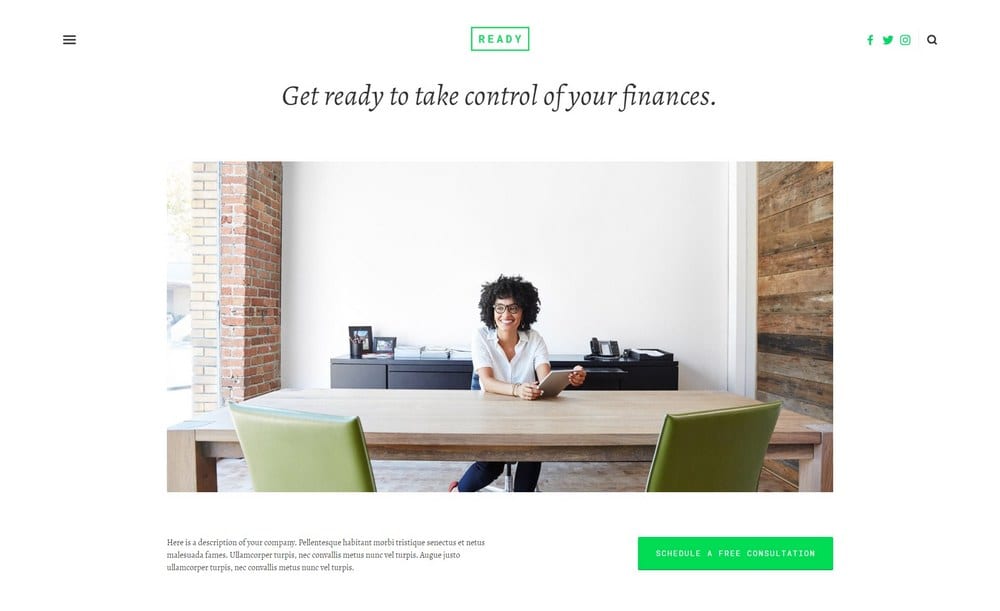
Ready
Best for Minimalist Mobile-Friendly Recipe Sites ✓ Pros
- Minimalist, fast-loading design ensures your recipe pages open instantly, especially important for mobile readers following along while cooking.
- Hidden left menu with slide-out navigation keeps the interface uncluttered and puts your recipe content front and center on every page.
- Outstanding mobile-friendliness makes it one of the best Squarespace templates for recipe sites where the majority of traffic comes from phones.
- Clean layout lets your recipe images make the strongest possible impression without competing visual elements or design noise.
- Lightweight code structure means faster page loads, which directly helps with search engine rankings for competitive recipe keywords.
✗ Cons
- The minimalist approach means fewer built-in design features, you'll need to be intentional about adding visual variety through your content.
- Hidden slide-out menu requires visitors to discover the navigation, which can confuse first-time readers.
- Limited customization options compared to more feature-rich templates, what you gain in speed, you trade for design flexibility.
Ready is the template that gets out of the way and lets your recipes do the talking. The minimalist design loads fast, looks sharp on every device, and creates a distraction-free reading experience that's ideal for someone standing in their kitchen with flour on their hands. There's no clutter competing with your recipe instructions, no heavy design elements slowing things down. For recipe bloggers who want their site to be fast, clean, and perfectly usable on a phone screen, Ready is one of the strongest Squarespace recipe templates available.
Enhancing Your Recipe Website
Selecting the Right Template
Choosing a Squarespace recipe template starts with understanding what kind of recipe content you create. A food photographer who posts weekly recipe galleries needs a different layout than a home cook who writes detailed, narrative-driven posts with step-by-step instructions. Templates like Kent and Carson are built for visual-first creators, while Rally and Ready prioritize fast-loading blog formats that keep readers focused on the recipe itself. Think about how your audience consumes your content, are they browsing for inspiration, or searching for a specific dish to make tonight?
Customization for Brand Identity
Every Squarespace template on this list can be customized, but the best recipe websites go beyond swapping colors and uploading a logo. Your template should reflect the personality of your food content. A rustic, farm-to-table recipe blog looks different from a modern, minimalist meal-prep site. Choose fonts that match your tone, build a consistent color palette that complements food photography, and make sure your homepage immediately communicates what kind of recipes visitors will find. The templates that feel most "you" are the ones readers remember and return to.
Optimizing for User Experience
Recipe site visitors have specific expectations: they want to find the recipe fast, read it easily on their phone, and not get lost in a maze of pop-ups and sidebars. Prioritize templates with clear navigation, fast page loads, and mobile-responsive layouts. Structure your recipe posts with scannable headings for ingredients and instructions. Keep your design and layout choices focused on readability, a beautiful template means nothing if readers can't follow the recipe while they're cooking.
Things to Consider When Choosing a Recipe Blog Template
Template Features and Functionality
Not all recipe blog templates offer the same tools. Some include built-in eCommerce for selling cookbooks or meal plans, while others focus purely on blog functionality. Consider whether you need video embedding for cooking tutorials, social media integration for driving Pinterest traffic, or a portfolio layout for food photography. The best Squarespace template for recipes is the one that supports how you actually create and monetize your food content, not the one with the most features you'll never use.
Design and Aesthetics
Food is inherently visual, which means your template's design language matters more than it does for most other types of websites. Look for templates that give food photography generous space, use neutral or white backgrounds that don't compete with colorful dishes, and offer typography that's readable without overwhelming the imagery. Templates like Skye and Mojave lead with visual impact, while Avenue and Ready prove that simplicity can be just as effective when the food photography is strong.
Mobile Responsiveness and SEO
The majority of recipe site traffic comes from mobile devices, people searching for dinner ideas on their commute, or pulling up a recipe on their phone while standing in the kitchen. Every template on this list is mobile-responsive, but some handle the mobile experience better than others. Ready and Rally are standouts for mobile speed and usability. For SEO, clean URL structures, fast load times, proper heading hierarchy, and image alt text all contribute to ranking well for competitive recipe search terms. Choose a template that makes these fundamentals easy to maintain.
Adding Recipe Cards and Structured Data to Your Squarespace Recipe Site
Choosing the right Squarespace recipe template is only part of the job. To compete in food search results, your recipe content needs to be structured in a way Google can read and reward. Here is how to go further than design alone.
Recipe Cards That Stand Out in Search
Google displays rich results for recipes, including star ratings, cooking time, calorie counts, and photos, directly in search snippets. These rich snippets dramatically increase click-through rates for recipe content. To qualify, your recipe pages need structured data (schema markup) that declares each recipe's metadata in a format search engines can parse. Squarespace does not add recipe schema automatically, but you can add it manually via a Code Block or Code Injection on each recipe page using JSON-LD format.
How to Display Recipes Effectively With Squarespace Templates
Most Squarespace templates were not designed specifically for recipes, but the ones on this list handle food content well because of their image-forward layouts and flexible text sections. For best results, structure each recipe post consistently: start with a hero photo, follow with a brief story or intro paragraph, then present your ingredients and instructions clearly using bullet and numbered lists. Squarespace's text blocks support both list types, and consistent formatting makes your content easier to scan on mobile, where most recipe searches happen.
Using Squarespace Blog for Recipes vs. Dedicated Pages
You can publish recipes as blog posts or as individual pages. Blog posts are better for SEO because they benefit from Squarespace's automatic sitemap inclusion, RSS feed, and category organization. They also allow comments, which adds user engagement signals. Individual pages are better for signature recipes you want to feature prominently in your navigation. Many food bloggers use both: blog posts for regular recipe publishing and a few dedicated pages for hero recipes, seasonal collections, or lead magnet content.
Frequently Asked Questions
What is the best Squarespace template for a recipe blog?
Can I sell cookbooks or meal plans on my Squarespace recipe website?
Which Squarespace recipe template loads fastest on mobile?
How do I add recipe videos to my Squarespace food blog?
Is Squarespace good for SEO for recipe websites?
Can I switch Squarespace templates after building my recipe blog?
How We Evaluate Templates
Conclusion: Find Your Perfect Squarespace Recipe Template
The best Squarespace template for recipes depends on how you create and share your food content. Skye is the top pick for food bloggers who lead with photography, Rally is built for creators who want speed and monetization, and Wells gives video-focused recipe makers a polished home base. If you want maximum simplicity and mobile performance, Ready delivers.
Pick the template that matches your content style, fill it with your best recipes and food photography, and start building the recipe site your audience will bookmark and return to every time they need cooking inspiration.
* Read the rest of the post and open up an offer