
Editor's Picks
| # | Name | Best For | Price | Rating | Image | |
|---|---|---|---|---|---|---|
| 1 | Colorful retro collections & funky vintage finds | Free | 4.7/5 |
|
More Info | |
| 2 | Seasonal vintage drops & editorial-style curation | Free | 4.8/5 |
.webp)
|
More Info | |
| 3 | Luxury vintage, designer resale & archival pieces | Free | 4.9/5 |

|
More Info | |
| 4 | Large vintage inventories & everyday vintage shops | Free | 4.6/5 |
.webp)
|
More Info | |
| 5 | Versatile vintage shops with diverse era coverage | Free | 4.7/5 |
.webp)
|
More Info |
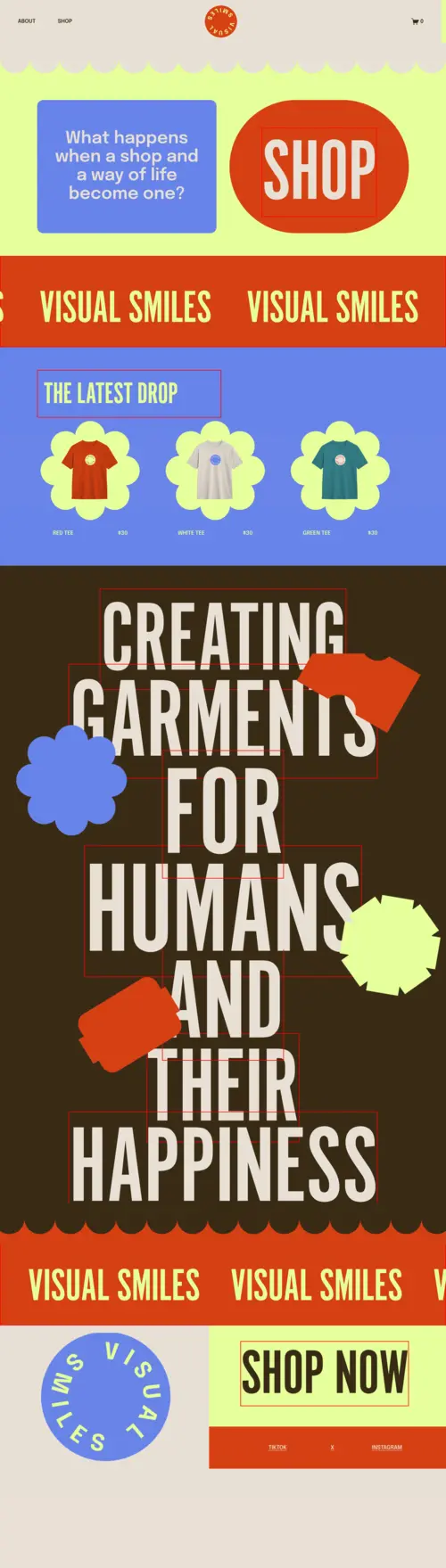
Visual Smiles
Best for Bold & Eclectic Vintage Collections ✓ Pros
• Vibrant color palette mirrors the energy of bold vintage pieces like '80s graphic tees, psychedelic prints, and statement outerwear• Playful grid layout organizes eclectic inventory without making it feel chaotic-perfect for shops with rotating, one-of-a-kind stock
• Large text overlays let you announce flash sales, new arrivals, or limited drops without cluttering product imagery
• Eye-catching homepage creates instant personality, helping your shop stand out in a sea of minimalist competitors
• Mobile-optimized design ensures colorful visuals pop on phones, where most vintage hunters browse between thrift runs
✗ Cons
• High-energy aesthetic may clash with shops selling muted, refined vintage like '90s minimalism or understated menswear• Bold design elements can compete with delicate or neutral-toned garments, making them harder to photograph cohesively
• Not ideal for sellers positioning themselves as luxury or high-end vintage-the playful vibe reads more approachable than upscale
Visual Smiles is the template equivalent of a perfectly curated vintage booth at a flea market-the one with the best eye-catching displays that make you cross the room. If your inventory runs toward the colorful, the quirky, and the conversation-starting, this template matches that energy without trying too hard. It's built for sellers who want their personality front and center. The layout practically begs for bold photography and punchy product names. If you're the kind of shop that names a '70s floral blouse "Stevie's Garden Party," Visual Smiles will make that energy land.
Mariana
Best for Seasonal Drops & Curated Capsules ✓ Pros
• Hero banner creates magazine-cover impact, perfect for showcasing your latest vintage haul or seasonal collection• Clean product grid prevents visual overwhelm while letting individual garments breathe-essential when every piece is unique
• Text overlay sections allow storytelling about sourcing trips, garment history, or the era behind each collection
• Limited collection focus works beautifully for shops that release curated drops rather than endless inventory
• Editorial layout attracts fashion-forward vintage shoppers who appreciate presentation as much as the pieces themselves
✗ Cons
• Hero-focused design requires strong photography-poorly lit or inconsistent images will undermine the polished aesthetic• Less suited for shops with massive, constantly rotating inventory that needs a more catalog-style approach
• Minimal layout may feel sparse for sellers who want to display sourcing stories, size guides, and care instructions prominently
Mariana treats your vintage collection the way it deserves to be treated-like an editorial spread, not a thrift store rack. The hero banner is your opening statement, and every grid below it feels intentional, like a buyer hand-selected each piece for exactly this moment. This template works brilliantly if you operate on a drop model-releasing curated capsules of '60s mod dresses one month, '90s grunge flannels the next. The text overlays let you build narrative around each release, turning a simple shop update into an event your customers anticipate.
Reseda
Best for High-End & Designer Vintage ✓ Pros
• Bold typography elevates product names and designer labels, giving vintage Chanel or archival Versace the presentation they deserve• Large hero visuals create gallery-like presentation for statement pieces, vintage couture, and rare collector's items
• Minimalist layout lets the garments command attention without competing design elements-crucial for high-value inventory
• Storytelling sections provide space for authentication details, condition notes, and provenance that luxury vintage buyers expect
• Sophisticated aesthetic attracts collectors and fashion professionals who shop vintage for investment, not just style
✗ Cons
• Premium aesthetic may feel overly formal for shops selling casual or everyday vintage at accessible price points• Requires investment in professional photography-the minimalist design exposes any visual inconsistencies immediately
• Less playful energy than other templates, which could feel austere for brands with a fun, approachable personality
Reseda is the white-glove treatment your vintage designer pieces have been waiting for. When you're selling a '90s Thierry Mugler blazer or a pristine Hermès scarf, you need a template that treats the product page like a gallery wall-and Reseda delivers that reverence. The storytelling sections aren't just a nice-to-have here; they're essential. Luxury vintage buyers want authentication details, measurements down to the quarter inch, and the story of how this piece survived three decades in impeccable condition. Reseda gives you space to tell it properly.
Alameda
Best for High-Volume Vintage Inventory ✓ Pros
• Grid-first product display handles large inventories without visual chaos-ideal for shops adding new vintage finds daily• Neutral, minimal design lets diverse vintage styles coexist without clashing, from '50s rockabilly to '00s Y2K
• Category organization makes it easy to sort by era, style, or garment type, helping shoppers find exactly what they're hunting
• Streamlined checkout process reduces cart abandonment for impulse vintage purchases
• Clean aesthetic photographs consistently across different vintage eras and color palettes
✗ Cons
• Minimal design offers less personality than bolder templates-may not stand out for shops competing on brand identity• Grid layout can feel catalog-like, lacking the boutique intimacy that some vintage shoppers seek
• Limited storytelling space makes it harder to share the history and sourcing details behind individual pieces
Alameda is the workhorse template for vintage sellers who move serious volume. When you're adding 50 new pieces a week from estate sales, consignment pickups, and sourcing trips, you need a layout that handles inventory without creating visual chaos-and Alameda delivers that functional beauty. The neutral design is a feature, not a bug. A '70s burnt orange suede jacket sits next to a '90s minimalist slip dress without either feeling out of place. For shops where variety is the selling point, Alameda keeps everything cohesive while letting each piece speak for itself.
Maru
Best for Multi-Era Vintage Collections ✓ Pros
• Featured collection sections let you highlight seasonal picks, new arrivals, or bestselling vintage eras without overwhelming the homepage• Elegant layouts adapt to different vintage aesthetics-works equally well for romantic Victorian pieces and edgy '80s power shoulders
• Smooth scrolling creates an immersive browsing experience that mimics the flow of walking through a well-designed vintage shop
• Promotional sections make it easy to spotlight sales, restocks, or limited vintage finds that need quick attention
• Balanced design serves both casual vintage shoppers and serious collectors without alienating either audience
✗ Cons
• Versatility means it lacks a strong singular aesthetic-may not be ideal for shops with a very specific vintage niche• Requires careful curation to prevent the homepage from feeling generic compared to more distinctive templates
• Featured sections work best with strong photography; inconsistent imagery will make the layout feel disjointed
Maru is the chameleon of vintage templates-it adapts to whatever you throw at it. Selling delicate Edwardian blouses alongside chunky '90s platform boots? Maru handles the tonal whiplash with grace, giving each piece room to shine without the overall site feeling scattered. The homepage flexibility is the real win here. Feature your latest sourcing haul one week, pivot to a holiday vintage gift guide the next. Maru keeps your shop feeling fresh and dynamic, which matters when your inventory is constantly turning over and your regulars are checking in weekly for new finds.
How to Choose the Right Squarespace Template for Your Vintage Clothing Store
Consider Your Inventory Volume and Turnover Rate
Shops adding dozens of pieces weekly need grid-focused templates like Alameda that handle volume without visual clutter. If you're running a highly curated operation with fewer, more precious pieces, editorial templates like Reseda or Mariana let each garment breathe. Match the template's capacity to your actual sourcing pace-an inventory-heavy layout feels sparse with only 20 products, while a boutique template gets overwhelming at 500.
Match the Template Energy to Your Vintage Niche
A shop specializing in bold '80s statement pieces needs a different visual language than one selling muted '90s minimalism. Visual Smiles brings the energy for colorful, eclectic inventory, while Reseda delivers the sophistication luxury vintage demands. Ask yourself: if your shop were a physical space, what would the lighting feel like? That answer should guide your template choice.
Think About Your Photography Capabilities
Minimalist templates like Reseda and Mariana expose weak photography immediately-there's nowhere to hide inconsistent lighting or cluttered backgrounds. If you're still building your photography setup, a busier template like Visual Smiles or Maru can be more forgiving. Be honest about where you are now, not where you hope to be in six months.
Plan for How Customers Browse Your Collection
Vintage shoppers often hunt by era, style, or garment type rather than scrolling endlessly. Templates with strong category organization (Alameda, Maru) help serious buyers find what they want quickly. If your customers browse more casually-enjoying the discovery process-a more editorial flow (Mariana, Reseda) enhances that experience.
Factor In Your Brand Positioning and Price Point
High-end vintage and designer resale demands a template that signals quality before visitors even see the price tags-Reseda delivers that gravitas. Accessible, everyday vintage works better with approachable templates like Visual Smiles or Maru that don't intimidate casual shoppers. Your template should prime visitors for your price point, whether that's $30 band tees or $3,000 archival pieces.
Frequently Asked Questions
What is the best Squarespace template for a vintage clothing store?
Can I sell one-of-a-kind vintage pieces effectively on Squarespace?
How much does Squarespace cost for a vintage clothing store website?
Can I switch Squarespace templates after building my vintage clothing website?
Do Squarespace vintage clothing templates work well on mobile devices?
Can I integrate vintage marketplace features like Depop or Poshmark with my Squarespace store?
What photography style works best for vintage clothing on Squarespace templates?
How do I show garment condition and measurements on a Squarespace vintage clothing website?
How We Evaluate Templates
Start Building Your Vintage Clothing Store Today
Your vintage pieces already have character-now your website needs to match. Whether you're drawn to the bold energy of Visual Smiles, the editorial sophistication of Reseda, or the workhorse reliability of Alameda, each of these templates gives your curated collection the digital home it deserves. Pick the one that fits how you source, how you sell, and how you want customers to feel when they land on your site. Then start building-your next regular is already out there searching for exactly what you've found.
* Read the rest of the post and open up an offer