
.webp)
Editor's Picks
| # | Name | Best For | Price | Rating | Image | |
|---|---|---|---|---|---|---|
| 1 | Monochrome streetwear brands, bold statement apparel, and edgy accessories labels | Free | 4.8/5 |
|
More Info | |
| 2 | Minimal streetwear brands and contemporary urban apparel with quality photography | Free | 4.7/5 |
|
More Info | |
| 3 | Tech-forward streetwear brands, exclusive drop labels, and hype-driven apparel releases | Free | 4.8/5 |
|
More Info | |
| 4 | Streetwear brands with strong brand stories, artistic identity, and editorial photography | Free | 4.6/5 |

|
More Info | |
| 5 | Streetwear brands with video content, collab drops, and a media-driven brand identity | Free | 4.7/5 |

|
More Info |
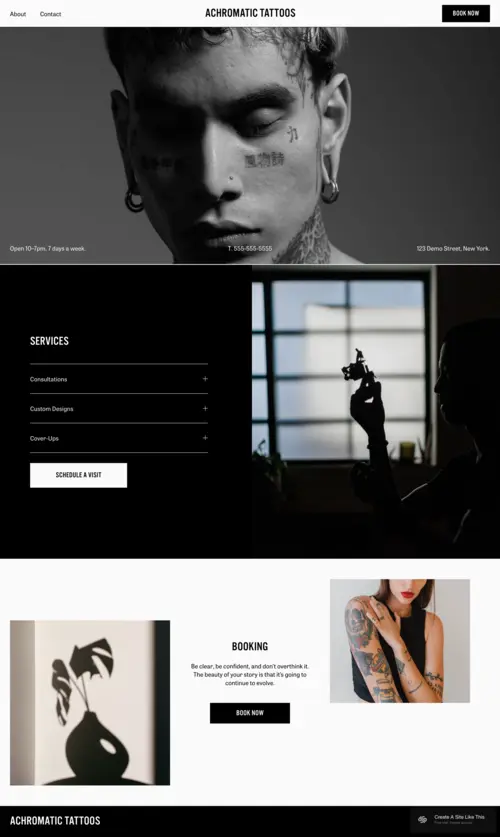
Achromatic
Best for Dark, Monochromatic Streetwear Brands ✓ Pros
- Dark, monochromatic design delivers the visual authority that streetwear brands need - the aesthetic communicates brand identity and cultural positioning before a visitor processes a single product image.
- Bold hero visuals command immediate attention, making Achromatic the natural fit for streetwear labels whose brand is built on edge, attitude, and the confidence to make a strong first impression.
- Clean product grid keeps the shopping experience organised despite the high-energy visual tone - streetwear customers browse fast, and a clear grid lets them move from discovery to decision without friction.
- Customisable service and product sections give streetwear brands the flexibility to surface limited drops, custom pieces, and accessories alongside core apparel in the same layout.
- Monochromatic typography and design elements let your streetwear photography own the visual hierarchy - the template frames your product rather than competes with it.
✗ Cons
- The dark, monochrome aesthetic is a strong identity commitment - streetwear brands with bright, colour-forward visual identities will need significant restyling before Achromatic works in their favour.
- Best suited for brands with a tight, consistent visual direction - if your streetwear line spans multiple very different aesthetics, Achromatic's strong POV can feel limiting.
- Requires photography shot for dark backgrounds - standard white-background studio shots lose impact in Achromatic's layout and undermine the premium edge the template is built to create.
Achromatic is the streetwear template for brands that have fully committed to their aesthetic. There's no softening here, no compromise - just bold design that says exactly what a great streetwear brand says: we know who we are, and so do you. If your collection is built around attitude and visual identity, this is the template that wears it right.
Seen
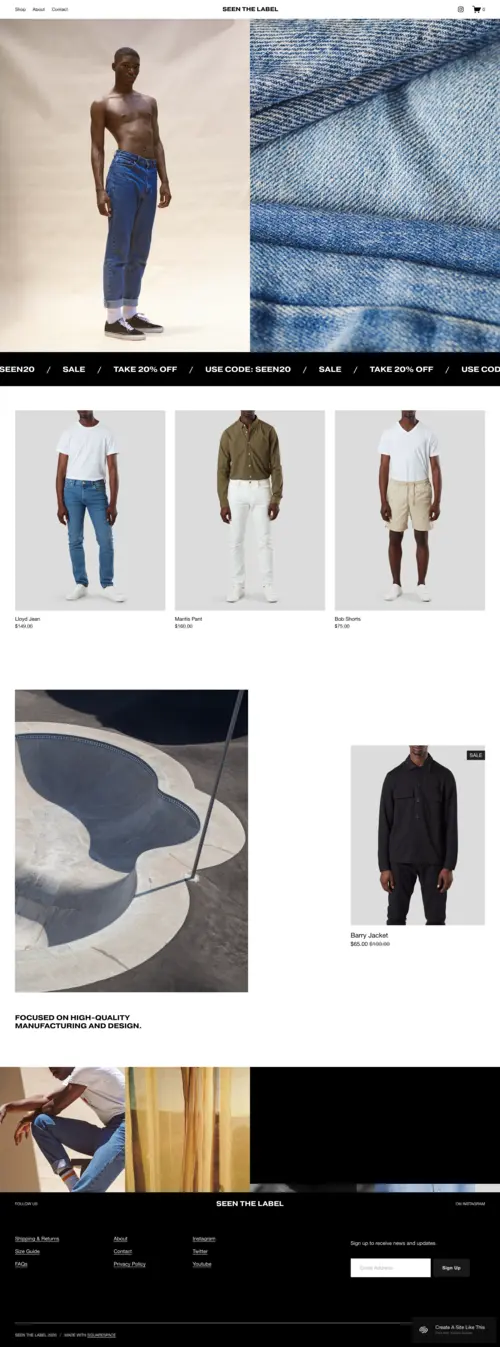
Best for Clean, Minimal Streetwear with Strong Photography ✓ Pros
- Full-screen hero imagery gives streetwear brands with strong photography the canvas to lead with their best campaign shot - the kind of bold, full-bleed visual that stops a scroll.
- Clean navigation keeps the entire experience distraction-free, so your streetwear collection stays front and centre without competing design elements pulling attention away from product.
- Image grid layout makes it easy to surface drops, bestsellers, and new arrivals in a visual hierarchy - streetwear customers browse fast, and Seen's grid respects that pace.
- Product spotlight sections let you break the rhythm to feature a hero piece or collab with dedicated real estate, signalling to visitors that this item is worth a closer look.
- Minimal, restrained design communicates a premium quality signal - in the streetwear space, where the market is crowded with bold visual noise, clean design is increasingly its own form of edge.
✗ Cons
- The minimal aesthetic requires consistently strong, intentional product photography - generic or inconsistent imagery will expose the simplicity of the layout rather than benefit from it.
- Not built for high-energy, graphic-heavy streetwear brands whose identity is built around visual boldness - Achromatic or Singularity serve that brand type better.
- Limited storytelling sections make it a weaker choice for streetwear brands with a strong cultural narrative or community identity that drives loyalty beyond the product itself.
Seen is for the streetwear brand that understands restraint is its own kind of statement. While the rest of the market competes on volume and visual noise, Seen gives your collection the space to breathe and your photography the room to land. It's the template for streetwear brands playing a longer game - building identity through quality of presentation rather than intensity of design.
Singularity
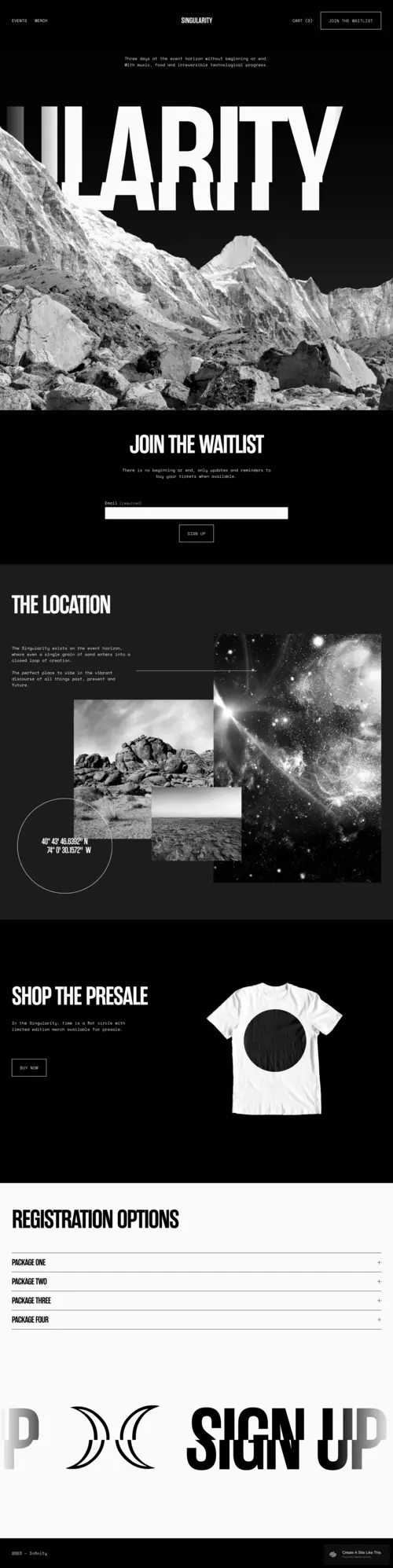
Best for Futuristic & Drop-Focused Streetwear Brands ✓ Pros
- Monochrome, high-contrast design with bold typography delivers a futuristic visual tone that positions streetwear brands operating at the intersection of fashion and technology exactly where they belong.
- Event RSVP and waitlist sign-up features are purpose-built for limited-edition drops - the template doesn't just sell products, it builds the hype infrastructure that drives the highest conversion on release day.
- Dramatic hero banners command full-screen attention and hold it, giving streetwear brands the space to tease a collection's aesthetic before revealing the full product - the reveal format that the most effective drop campaigns use.
- Clean navigation ensures that even on launch day, when traffic spikes and urgency is highest, the path from landing to purchase is frictionless - the streamlined UX prevents drop-day cart abandonment.
- High-contrast visual design performs exceptionally on mobile - critical for streetwear brands whose audience is overwhelmingly browsing and purchasing from their phones, often within minutes of a social media announcement.
✗ Cons
- The futuristic, high-contrast aesthetic is a specific visual commitment - streetwear brands with a more organic, hand-crafted, or vintage identity will find Singularity's sharp digital energy works against their positioning.
- Optimised for the drop moment rather than ongoing catalogue browsing - brands that sell always-on inventory rather than limited releases won't get the full benefit of Singularity's RSVP and hype-building features.
- The bold visual language requires photography that matches its intensity - soft, lifestyle-forward product shots can feel out of place in Singularity's high-contrast, high-energy layout.
Singularity is built for the streetwear brand that makes every release feel like an event. The monochrome intensity, the RSVP integration, the dramatic hero - everything here is telling your audience that what's coming is worth waiting for. If your streetwear brand lives in the drop economy, Singularity is the template that runs the whole operation.
Hart
Best for Editorial Streetwear & Brand Narrative-Driven Labels ✓ Pros
- Bold black-and-white editorial layout gives streetwear brands with a strong artistic identity the space to present clothing as culture - the design positions product inside a larger brand narrative rather than treating it as a standalone item.
- Storytelling-forward structure lets streetwear brands communicate the inspiration, community, or cultural moment behind a collection - a powerful differentiator in a market where the story behind the product drives loyalty more than the product itself.
- Minimalist grid for product presentation keeps the shopping experience clean even as the editorial sections build brand depth - the two functions coexist without competing.
- Black-and-white design palette lets your photography carry the colour - striking for streetwear brands with bold colourways that pop against the monochrome template aesthetic.
- Editorial-style layout works naturally with blog content, lookbook posts, and behind-the-scenes storytelling - ideal for streetwear brands building an organic content and SEO strategy alongside their eCommerce.
✗ Cons
- The editorial, narrative-forward structure requires consistent content to stay alive - streetwear brands without a content strategy will find Hart's story-heavy sections looking thin and incomplete.
- The restrained black-and-white aesthetic may feel too quiet for high-energy streetwear brands whose identity relies on visual boldness, graphic intensity, or loud colour - Achromatic or Singularity serve that better.
- Less optimised for pure product-first eCommerce browsing - visitors who arrive wanting to shop directly may get distracted by the editorial content before they reach the product grid.
Hart is for the streetwear brand that understands clothing is a medium, not just a product. The editorial layout, the story sections, the black-and-white restraint - this template is built for brands where the narrative behind the collection is as important as the collection itself. If your streetwear label has something to say beyond the drop, Hart gives you the architecture to say it.
Otroquest
Best for Media-Forward Streetwear & Collaborative Brand Drops ✓ Pros
- Featured video integration brings streetwear campaign films, brand stories, and behind-the-scenes content directly into the homepage experience - for streetwear brands whose cultural identity lives in video as much as product, this is a fundamental feature.
- Merch and apparel integration supports streetwear brands operating at the crossover between fashion and music, gaming, sport, or art - the layout lets cultural product and clothing coexist without either feeling secondary.
- Bold, dynamic visuals match the elevated pace of streetwear's cultural feed - this isn't a passive browsing experience, it's an active brand environment that keeps the audience engaged and coming back.
- Event and stream schedule sections create space for announcing collabs, pop-ups, and release events - turning the website into a live brand platform rather than a static product catalogue.
- High-energy interactive structure appeals specifically to the Gen Z streetwear audience who expects brands to exist and communicate in cultural space, not just retail space.
✗ Cons
- The media-heavy layout demands consistent content production - streetwear brands without a regular video or content output will quickly find Otroquest's dynamic sections looking static and neglected.
- The interactive, media-forward structure isn't optimised for straightforward product browsing - streetwear customers who arrive wanting to shop directly may get lost in content before reaching the eCommerce sections.
- The high-energy aesthetic is built for a specific kind of streetwear brand - heritage, vintage, or quietly luxurious streetwear labels will find Otroquest's intensity contradicts rather than supports their positioning.
Otroquest is for the streetwear brand that's also a content brand. If your clothing exists inside a larger world - music you make, artists you collaborate with, events you throw, culture you generate - and your audience follows that world as much as they follow the drops, Otroquest is the template that holds both at the same time. It's not just a shop. It's a home base.
How to Choose the Right Squarespace Template for Your Streetwear Brand
Match the Template's Aesthetic to Your Brand's Visual Language
The most important factor in choosing a streetwear website template isn't features - it's whether the design immediately communicates your brand's identity. Achromatic's dark monochrome speaks to the bold streetwear brand that leads with edge and attitude. Seen's minimal cool appeals to the more restrained, quality-focused streetwear aesthetic. Singularity's futuristic high-contrast is for tech-forward brands and the drop economy. Hart's editorial black-and-white suits brands with a strong artistic narrative and cultural story. Otroquest's media-forward energy is for brands that operate at the intersection of streetwear and content culture. Choose based on which template a member of your target audience would immediately recognise as belonging to their world - because they'll make that judgement in seconds.
Decide Whether Your Brand Runs on Drops or Always-On Inventory
Streetwear brands typically run on one of two models: always-on inventory (continuous catalogue available year-round) or the drop model (limited releases that sell out fast and drive scarcity and urgency). For always-on brands, Achromatic, Seen, Hart, and Otroquest all have strong product-browsing architecture that supports ongoing discovery and purchase. For drop-model brands, Singularity is specifically engineered for that moment - with RSVP, countdown, and waitlist features that build pre-launch hype and capture intent before the release. If you run a hybrid model, consider Singularity for launch campaigns while maintaining Achromatic or Seen as your primary eCommerce base.
Consider How Much Brand Story Your Audience Needs
Different streetwear audiences need different amounts of narrative before they buy. Some audiences are purely product-driven - they see the drop, they know the brand, they buy. For those audiences, Achromatic and Seen's product-forward layouts serve them fastest. Other streetwear audiences are deeply invested in the brand's cultural identity - the inspiration behind the collection, the community it serves, the artists it involves. For those audiences, Hart and Otroquest's story-forward and content-forward layouts create the emotional investment that converts browsers into loyal customers. Knowing which type of audience you're building for should drive your template choice as much as any design preference.
Think About Your Photography and Content Production Reality
Every template on this list performs differently depending on what you feed it. Seen and Achromatic can work with minimal content - a few strong product shots and a clear brand direction are enough. Hart benefits from editorial photography and short-form brand writing. Singularity needs bold, high-contrast imagery and a consistent drop schedule. Otroquest requires ongoing video and event content to stay active and relevant. Be honest about your production capacity before choosing - a visually complex template that you can't keep fed will always underperform a simpler template that you update consistently.
Frequently Asked Questions
What is the best Squarespace template for a streetwear brand?
Can I sell streetwear on Squarespace?
How do I build hype for a streetwear drop on Squarespace?
Is Squarespace good for streetwear brands?
What pages should a streetwear website include?
Can I use Squarespace for a streetwear brand launching pre-orders?
What makes a good streetwear website template?
How much does a Squarespace streetwear website cost?
How We Evaluate Templates
Conclusion: Find the Squarespace Streetwear Template That Speaks Your Brand's Language
Streetwear audiences make decisions fast - and they make them based on whether your brand feels like their world. Achromatic says it with edge. Seen says it with restraint. Singularity says it with hype architecture. Hart says it with story. Otroquest says it with culture and content. The right template is the one that says it in the same voice your brand already uses.
Choose the one that matches your visual identity, build it around your strongest photography, and let your Squarespace streetwear site do the positioning work at scale. Still exploring? Our full guide to Squarespace fashion templates covers every clothing niche, and street food templates are worth a look if your brand extends into hospitality or events.
* Read the rest of the post and open up an offer