
Editor's Picks
| # | Name | Best For | Price | Rating | Image | |
|---|---|---|---|---|---|---|
| 1 | Holistic personal stylists and wardrobe consultants offering 1:1 sessions | Free | 4.8/5 |

|
More Info | |
| 2 | Minimalist personal stylists with a clear niche focus and a curated client approach | Free | 4.7/5 |
|
More Info | |
| 3 | Activewear stylists, wellness fashion consultants, and personal stylists with an active lifestyle niche | Free | 4.6/5 |

|
More Info | |
| 4 | Luxury personal stylists, image consultants targeting premium clients, and multi-service creative brands | Free | 4.8/5 |

|
More Info | |
| 5 | Personal styling collectives, multi-stylist teams, and boutique styling agencies | Free | 4.6/5 |

|
More Info |
Jenani
Best for Holistic & Consultation-Led Personal Stylists ✓ Pros
- Earthy, calming colour palette creates an immediate sense of trust and approachability - precisely the emotional tone that personal stylists need to establish before a potential client considers booking a session.
- Embedded booking system lets visitors schedule consultations directly from the site without navigating away or hunting for a contact form - reducing the friction that costs personal stylists their highest-intent visitors.
- Service promotion sections are structured to showcase individual offerings (wardrobe audit, personal shopping, capsule wardrobe build) in a way that's clear, scannable, and easy to price anchor without overwhelming visitors.
- Testimonial and portfolio integration gives personal stylists the social proof architecture they need - client transformations, before/after styling results, and written reviews sit naturally within the layout.
- FAQ section built into the template structure addresses the real objections personal styling clients have (What does a session involve? How long does it take? Is it worth it?) in a conversational format that feels authentic rather than salesy.
✗ Cons
- The earthy, holistic aesthetic works best for personal stylists with a grounded, wellness-adjacent brand - stylists with a high-fashion, urban, or corporate image consulting focus may find the tone too soft for their target client.
- The design is warm and approachable but not visually bold - personal stylists whose portfolio depends on dramatic fashion imagery and editorial photography may find Jenani's layout doesn't give that work enough impact.
- The holistic tone can work against stylists targeting corporate clients or luxury fashion consumers, who often expect a more structured, premium, and authoritative visual presentation.
Jenani is the personal stylist template for practitioners who understand that clients don't just book a service - they place their image in someone's hands. The earthy tones, the grounded layout, the seamless booking integration - every design decision is building the trust that makes that leap feel safe. If your styling practice is built around genuine transformation and personal connection, Jenani communicates that before you say a word.
Randi
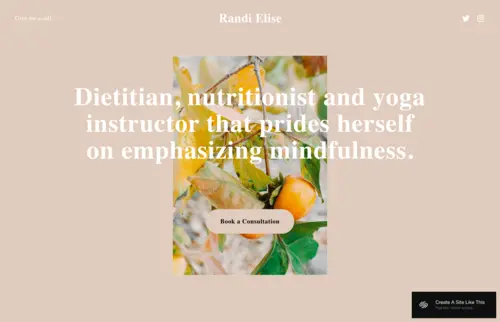
Best for Minimalist & Niche-Focused Personal Stylists ✓ Pros
- Minimalist layout with generous whitespace keeps the visitor's focus entirely on your styling philosophy and service offering - no visual clutter competes with the message you're trying to deliver to a potential client.
- Strong central hero image drives immediate impact - for personal stylists, this is the prime real estate to show your aesthetic sensibility, whether that's a signature look, a styled outfit flat lay, or a confident lifestyle image.
- Clear, prominent call-to-action placement (Book a Consultation) sits at every scroll depth that matters - eliminating the scenario where a convinced visitor can't find the next step and leaves without enquiring.
- Restrained typography and design language communicates intentionality - in the personal styling market, a clean, curated website signals that your aesthetic judgement can be trusted before a client ever speaks with you.
- Flexible enough for expansion as your styling practice grows - blog, testimonial, and additional service pages can be added without disrupting the clean visual structure.
✗ Cons
- The minimal layout works best for personal stylists with a tight, well-defined niche - if your styling services span multiple very different audiences or aesthetics, Randi's restrained design can feel too narrow.
- Best suited for smaller portfolios with a curated selection of work - personal stylists with a large portfolio of client transformations will find the layout struggles to showcase volume without feeling overcrowded.
- The quiet, whitespace-forward aesthetic doesn't suit personal stylists building a high-energy, social-media-forward brand where vibrancy and personality are the primary attraction.
Randi is for the personal stylist who has defined exactly who they are, who they serve, and what makes their approach different - and wants a website that communicates all of that without saying too much. The minimalist design isn't emptiness; it's editorial restraint. It's the template equivalent of a perfectly curated capsule wardrobe: nothing wasted, everything intentional.
Lakshi
Best for Activewear & Wellness-Focused Personal Stylists ✓ Pros
- Bold, energetic design immediately communicates the active lifestyle aesthetic that activewear stylists need to project - your site looks and feels like the clientele you're styling before a visitor reads a service description.
- Dedicated testimonial sections prominently feature client results in a layout that personal stylists can use to showcase transformation stories, before-and-after styling outcomes, and long-term client relationships.
- Subscription feature supports personal stylists who offer ongoing services - weekly style tips, style box curation, monthly wardrobe updates, or exclusive client newsletters all have a delivery mechanism built in.
- Customisable service sections work well for personal stylists with tiered offerings - entry-level styling audits, ongoing monthly retainers, and premium wardrobe overhauls can each have their own section with distinct copy and CTAs.
- Bold typography and interactive elements create the sense that your styling practice is dynamic, current, and connected - signals that matter to the wellness and activewear styling audience who are shopping for freshness as much as expertise.
✗ Cons
- The high-energy, athletic design is calibrated specifically for activewear and wellness fashion - personal stylists working in corporate image consulting, luxury fashion, or formal styling will find the tone inconsistent with their client expectations.
- The bold visual style requires equally bold photography - lifestyle images of clients in motion, athletic settings, and active contexts. Formal portrait photography or static product shots will clash with Lakshi's energetic layout.
- The subscription-forward structure requires a commitment to ongoing content - stylists who can't sustain regular newsletters or style updates will find this feature creates an empty promise rather than a business asset.
Lakshi is for the personal stylist whose clients come to them to feel good in their bodies as much as in their clothes. The bold design, the energetic layout, the subscription infrastructure - this template is built for a styling practice that's part fashion, part wellness, and fully alive. If your clients are active people who want to look the part as much as feel it, Lakshi speaks their language immediately.
Myhra
Best for Luxury Personal Stylists & Multi-Passionate Creative Brands ✓ Pros
- Deep, sophisticated colour palette sets a refined tone from first load - for personal stylists targeting luxury clients, this immediate visual signal of premium quality is the most important conversion factor on the page.
- Dedicated coaching and service sections are designed to showcase multi-tier offerings in a way that feels elevated - wardrobe consulting, personal shopping, image consulting, and workshop facilitation can all coexist without the layout feeling crowded.
- Content-heavy blog and portfolio sections support personal stylists building a thought leadership strategy - written expertise, trend editorials, and client case studies all have a natural home in Myhra's architecture.
- Elegant typography and polished layout signal the kind of attention to detail that luxury clients expect from a personal stylist - the design communicates that you approach your work with the same level of craft they apply to their wardrobe.
- Multi-faceted design works for personal stylists with broader creative identities - those who combine styling with lifestyle content, wellness coaching, or creative direction have room to present all dimensions of their practice without it feeling scattered.
✗ Cons
- The deep, luxurious colour palette requires thoughtful photography to match - images that don't align with the premium aesthetic (poor lighting, inconsistent styling, low resolution) will undermine the luxury positioning the template creates.
- The content-heavy architecture requires ongoing effort to keep full - personal stylists without a content strategy will find Myhra's blog and portfolio sections looking sparse and incomplete.
- The multi-faceted layout is powerful for personal stylists with broad offerings, but can feel unfocused for solo practitioners with a single, tightly defined service - Randi or Jenani may communicate more clearly for those practitioners.
Myhra is for the personal stylist who has built a complete world around their practice - not just a service, but an aesthetic philosophy, a point of view, and a brand that clients aspire to be part of. The deep tones, the editorial layout, the multi-section depth - this is the template that says your work is worth investing in before a client reads a single price point.
Clove
Best for Styling Collectives & Multi-Stylist Teams ✓ Pros
- Team profile sections give styling collectives the dedicated space to spotlight each stylist's speciality, background, and personality - allowing clients to self-select the team member whose approach resonates most before booking.
- Community-forward design aesthetic creates a welcoming, approachable brand environment - important for styling collectives where the relationship between multiple stylists and multiple clients needs a cohesive identity that doesn't feel corporate.
- In-person and remote service options are architecturally embedded - for personal styling teams offering both face-to-face wardrobe sessions and virtual consulting, both pathways are presented with equal clarity and prominence.
- Blog layout designed for shared content makes it easy for the whole team to contribute - a multi-author styling blog with trend insights, team perspectives, and client stories is a natural fit for the Clove structure.
- Flexible, collaborative design allows individual stylists within the collective to maintain distinct personalities while the overall site maintains a coherent brand identity - a balance that's genuinely difficult to achieve with most templates.
✗ Cons
- The community and collective focus is Clove's strength but also its limitation - solo personal stylists won't benefit from the team profile sections, and the collaborative aesthetic can feel misaligned with the solo practitioner's personal brand.
- The approachable, welcoming design aesthetic positions the brand as accessible rather than exclusive - styling collectives targeting ultra-high-net-worth clients may find Myhra's luxury positioning a stronger match.
- The blog-forward architecture requires consistent content contribution from the team - if only one stylist is producing content, the multi-contributor design promise of the template goes unfulfilled.
Clove is for the personal styling practice that's bigger than one person. The team profiles, the collaborative design, the in-person and virtual service options - this template is built for the collective: the group of stylists who share a vision, a client base, and a brand. If you're building a styling agency, not just a solo practice, Clove gives your team its online home.
How to Choose the Right Squarespace Template for Your Personal Styling Business
Match the Template's Tone to Your Client's Expectations
Your personal stylist website template is your first client interaction - and it needs to communicate the same thing your first consultation does: that you understand this person's world and can elevate it. Jenani's grounded warmth speaks to clients seeking holistic wardrobe transformation. Randi's restrained minimalism resonates with image-conscious clients who value precision. Lakshi's energetic boldness attracts active lifestyle clients who want to look as good as they feel. Myhra's sophisticated depth draws in luxury clients who expect premium treatment from first contact. Clove's collaborative warmth works for styling agencies where the collective identity matters as much as the individual stylists. Choose the template whose tone your ideal client would recognise and feel at home in.
Prioritise Booking Functionality That Converts High-Intent Visitors
The most expensive thing a personal stylist website can do is lose a high-intent visitor who couldn't find or didn't feel confident enough to use the booking function. All five templates support Squarespace's native scheduling and form integrations, but they handle the booking CTA differently. Jenani integrates the booking function directly and prominently - it's part of the template's core architecture. Randi places a clear CTA at every scroll depth. Lakshi and Myhra both have strong service sections that lead naturally to booking. Clove enables visitors to select a specific team member before booking. Whichever template you choose, test the booking path yourself before going live - click through as a new client would, and remove any friction between landing and enquiring.
Consider What Social Proof Format Serves Your Niche Best
Personal styling is a credibility business, and different types of social proof land differently depending on your target client. Testimonials (written quotes from clients about their experience and transformation) work well in all five templates, but Jenani and Lakshi give them the most structural prominence. Before-and-after portfolio photography makes the clearest visual case and works well in Myhra's content-heavy layout. Case studies (detailed client stories that walk through the challenge, process, and outcome) are best suited to Myhra's blog architecture. Team credentials and individual stylist expertise are showcased most effectively in Clove's team profile sections. Choose the template that best supports the type of social proof that works hardest for your specific styling niche.
Think About Whether You're Building a Practice or a Platform
Some personal styling businesses are practices: a focused set of services delivered to a defined client type, with the website's job being to convert visitors into clients and nothing more. Others are platforms: multi-service businesses that combine styling with content, education, community, or product - where the website needs to hold multiple business functions simultaneously. For practice-focused stylists, Jenani, Randi, and Lakshi are optimised for conversion with clarity. For platform-building stylists who need to house services, content, products, and community in one site, Myhra and Clove give you the architecture to do that without the layout feeling fragmented.
Frequently Asked Questions
What is the best Squarespace template for a personal stylist website?
How should a personal stylist website be structured?
Can I take bookings through a Squarespace personal stylist website?
What makes a good personal stylist website template?
How much does a Squarespace personal stylist website cost?
Should a personal stylist use Squarespace or Instagram for their main website?
Can I show before-and-after styling photos on a Squarespace personal stylist website?
Is Squarespace good for personal stylists?
How We Evaluate Templates
Conclusion: The Right Personal Stylist Template Is the One That Sounds Like You
The best personal stylist website isn't the most beautiful one - it's the one that makes your ideal client feel like you wrote it specifically for them. Jenani builds that through warmth. Randi builds it through precision. Lakshi builds it through energy. Myhra builds it through luxury. Clove builds it through community. Choose the template that reflects how you actually work, not how you think a stylist's website should look.
Pick your template, lead with your most specific, niche-relevant language, and let your Squarespace personal stylist website do the trust-building at scale - so every visitor who's the right fit for your practice finds their way to your booking page.
* Read the rest of the post and open up an offer