
Editor's Picks
| # | Name | Best For | Price | Rating | Image | |
|---|---|---|---|---|---|---|
| 1 | BBQ caterers, grill specialists, sauce brands, and casual event catering with bold brand personalities | Free | 4.7/5 |
|
More Info | |
| 2 | Artisan caterers, farm-to-table businesses, condiment or specialty food brands with catering services | Free | 4.6/5 |
|
More Info | |
| 3 | Vegan caterers, health-conscious food businesses, and upscale regional catering tied to specific venues or locations | Free | 4.7/5 |
|
More Info | |
| 4 | Casual caterers, burger and comfort food specialists, pop-up catering, and brands with a fun, trendy identity | Free | 4.6/5 |

|
More Info | |
| 5 | Upscale event caterers, wedding caterers, corporate fine-dining services, and private dining specialists | Free | 4.9/5 |
|
More Info |
Our Picks: The Best Squarespace Catering Website Templates
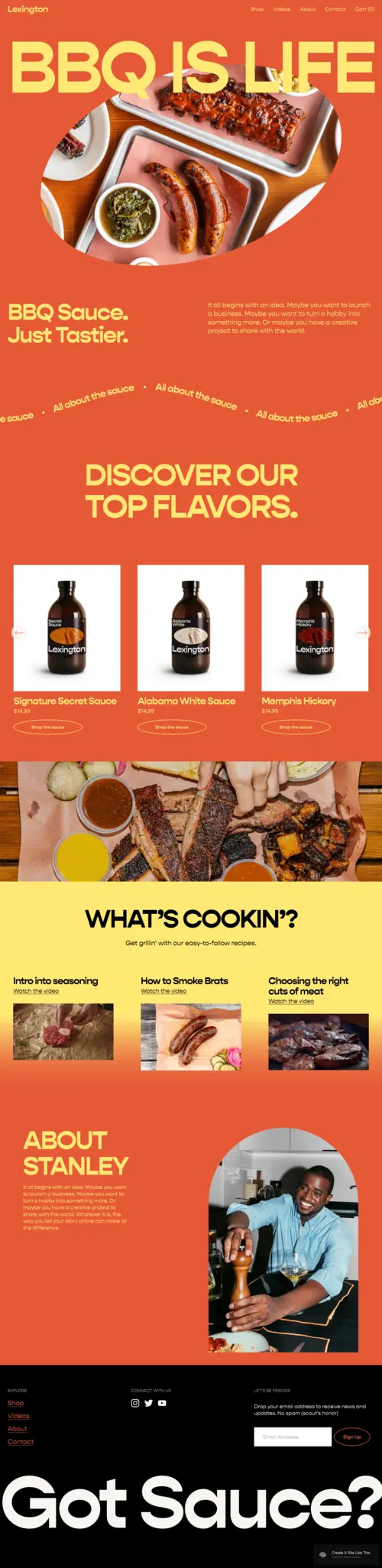
Lexington
Best for BBQ, Grill & Bold Catering Brands With Strong Visual Identity ✓ Pros
- Warm, bold colour palette instantly communicates the visual language of BBQ and grill catering, clients searching for this style of caterer recognise the aesthetic before reading a word, and that recognition shortens the conversion journey significantly.
- Product-focused section architecture displays signature dishes, menu highlights, and catering package options in a layout that mirrors how BBQ caterers actually sell, by leading with the food and the flavour story, not the logistics.
- Video integration capability lets catering businesses add behind-the-scenes footage, recipe demonstrations, or event highlight reels that communicate the quality and energy of their service in a way static photography alone cannot match.
- Storytelling sections, the "What's Cookin'?" format, naturally accommodate the brand narrative that the best catering businesses are built on: the origin story, the family recipe, the passion behind the smoke and fire that makes you the right choice over a generic competitor.
- E-commerce compatibility supports catering businesses that sell products alongside services, custom sauces, seasonings, spice rubs, and merch can all be sold directly through the site, adding a revenue stream that larger catering website templates often don't accommodate cleanly.
✗ Cons
- The bold, warm BBQ aesthetic is a strong visual commitment, catering businesses outside the grill and smoke niche (Mediterranean, Asian fusion, upscale plated service) will need significant restyling before the template's personality works in their favour rather than against it.
- The product and e-commerce-forward layout is most powerful for caterers with physical goods to sell or rich menu content to showcase, catering operations that are entirely event-led without a retail product line won't use the template's full architecture.
- The high-energy visual tone communicates casual dining more readily than formal event catering, businesses targeting weddings, black-tie corporate events, or premium private dining will find the aesthetic creates a tone mismatch with their client's expectations.
Lexington is the catering website template for caterers who have a personality as big as their portions. The warm palette, the bold food photography, the storytelling sections, every element is built for a catering brand where the food isn't just fuel, it's the whole point. If your catering business runs on smoke, fire, and flavour, Lexington is the digital presence that makes clients taste it before they've placed an enquiry.
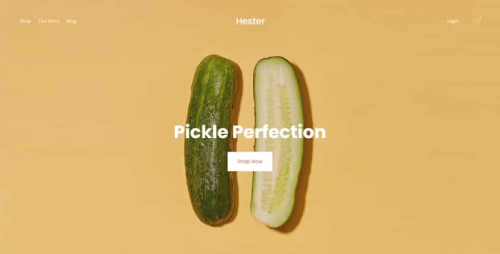
Hester
Best for Artisan, Farm-to-Table & Condiment-Focused Catering Businesses ✓ Pros
- Crisp minimalist design places the focus entirely on product quality and ingredient provenance, exactly the right hierarchy for farm-to-table and artisan catering businesses where the quality of sourcing is a primary differentiator from mass-market competitors.
- Modern grid-style product layout is well-suited to catering businesses that need to showcase a range of offerings, a condiment line, a seasonal menu rotation, or a selection of signature dishes, without the layout becoming cluttered or difficult to scan.
- Email sign-up CTA integration is built into the design in a way that feels natural rather than intrusive, supporting catering businesses that want to build a client list for seasonal menus, event announcements, or pre-order campaigns.
- The clean, sustainability-adjacent aesthetic communicates values alignment with clients who prioritise locally sourced, handcrafted, or environmentally considered catering, a growing client segment that actively seeks out brands whose design signals match their purchasing values.
- Simplicity of navigation ensures catering clients can find your menu, contact information, and booking enquiry form without distraction, an important conversion factor for event planners who visit multiple catering sites in quick succession and reward clarity.
✗ Cons
- The minimalist aesthetic, while striking with high-quality photography, can feel sparse and unfinished for catering businesses with large menus or complex event packages that genuinely need more visual and textual depth to communicate their offer.
- The condiment and artisan product visual language may not translate immediately to full-service event catering, businesses that cater weddings, corporate events, or large-scale gatherings may find the template's intimate scale undersells the scope of what they deliver.
- Limited sections for social proof, testimonials, or event portfolio photography make Hester less suited to catering businesses at the stage where demonstrating experience and past event success is a critical conversion driver.
Hester is the catering website template for businesses where the ingredient is the story. The minimal design, the clean grid, the natural visual palette, it's built for the caterer who knows that the best food speaks for itself, and whose website should reflect that confidence. For artisan caterers, farm-to-table specialists, and specialty food businesses with a catering arm, Hester communicates quality before a single menu item is listed.
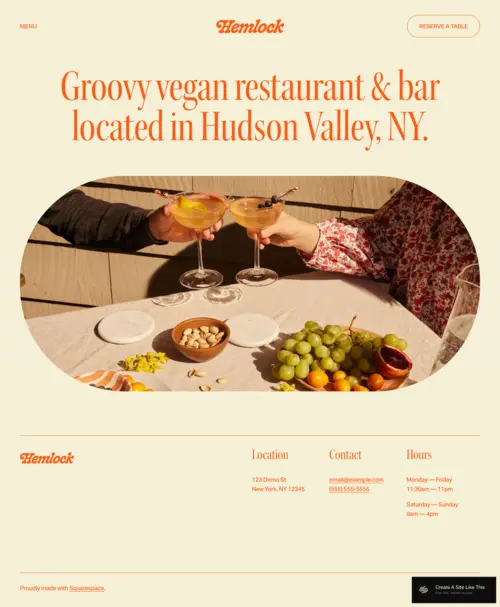
Hemlock
Best for Vegan, Health-Conscious & Upscale Regional Catering Services ✓ Pros
- Warm, earthy tones and clean typography communicate the aesthetic of premium plant-based and health-conscious catering, a visual language that resonates immediately with clients who seek this type of catering and differentiates you from generic competitors at first glance.
- Location and hours display functionality makes this template particularly well-suited to catering services that operate in specific regions or are tied to particular venues, communicating geographic focus builds trust with clients who want a caterer with genuine local knowledge and supplier relationships.
- Reservations and inquiry integration creates a direct booking pathway for catering businesses that pre-qualify clients through consultations, the design positions the first contact as a conversation, not a transaction, which suits the high-value decision-making process of event catering.
- Social media link integration keeps clients connected to the living portfolio of your catering work, for vegan and health-conscious caterers, an active Instagram feed linked from your website provides constant visual evidence of your current seasonal menu and event work.
- Minimalist design aesthetic reduces distraction and keeps client attention on your menu philosophy, location credentials, and the enquiry CTA, particularly important for catering businesses where the sales process begins with alignment of values and culinary vision, not comparison of prices.
✗ Cons
- The location-emphasis design works strongly for venue-affiliated or regionally-focused catering businesses but may feel limiting for full-service caterers who travel widely and want to communicate geographic flexibility rather than roots in a specific area.
- Limited capacity for large-scale event portfolio display, caterers who want to showcase a substantial library of past events, diverse venue types, or wide-ranging menu capabilities may find Hemlock's restrained layout insufficient for communicating that depth of experience.
- The vegan and health-conscious visual language is a specific aesthetic positioning, catering businesses with a mixed or broad menu offering that includes meat-focused options may find the template's tone creates a mismatch with client expectations before the menu is even read.
Hemlock is the catering website template that lets your values speak before your menu does. For vegan caterers, plant-forward businesses, and health-conscious catering services that operate with a genuine point of view about food and sustainability, Hemlock's warm, earthy design says it all without a manifesto. Clients who are looking for what you offer will recognise themselves in this template before they've read past the headline.
Tantillo
Best for Casual, Energetic & Personality-Driven Catering Businesses ✓ Pros
- Bold oversized typography and vibrant food imagery communicate catering brand personality instantly, for casual event caterers, street food operators, and comfort food specialists, the visual energy of Tantillo signals exactly the kind of fun, approachable experience clients are looking for.
- Menu showcase sections are clearly structured and visually prominent, making it easy for catering clients to quickly understand your offering, build excitement around specific dishes, and move toward an enquiry or reservation without needing a follow-up call to understand what you serve.
- Reservation and event booking CTA architecture is positioned for high conversion, the playful design lowers the psychological barrier to making first contact, which is particularly effective for catering businesses whose brand personality makes enquiring feel more like reaching out to a friend than submitting a corporate RFP.
- Social proof integration through customer review sections and social media feeds keeps the site dynamic and gives prospective clients the evidence of real events and happy customers that casual catering conversions depend on most heavily.
- Flexible colour and typography customisation lets you tune Tantillo's inherent boldness up or down, catering businesses that want the energy without the maximalism can dial back the palette while keeping the conversion-ready layout architecture intact.
✗ Cons
- The bold, casual-dining aesthetic is designed for approachable catering brands, applying it to formal event catering, wedding catering, or premium private dining creates a tone mismatch that may actively deter the high-value clients those services depend on.
- The high-energy visual design requires strong, colourful food photography to sustain its impact, catering businesses without a professional food photography library will find the template's boldness works against them rather than for them with mediocre imagery.
- The playful, personality-forward design may not communicate the reliability and organisational competence that corporate event catering clients specifically need to see, business clients often prioritise logistical credibility over brand personality in their vendor selection process.
Tantillo is for the catering brand that knows its personality is its product. The bold layout, the vibrant food photography, the straightforward booking CTAs, it's built for caterers whose clients hire them for the experience and the energy as much as the food itself. If your catering business is the kind that gets talked about after the event ends, Tantillo is the website that sets that expectation from the first scroll.
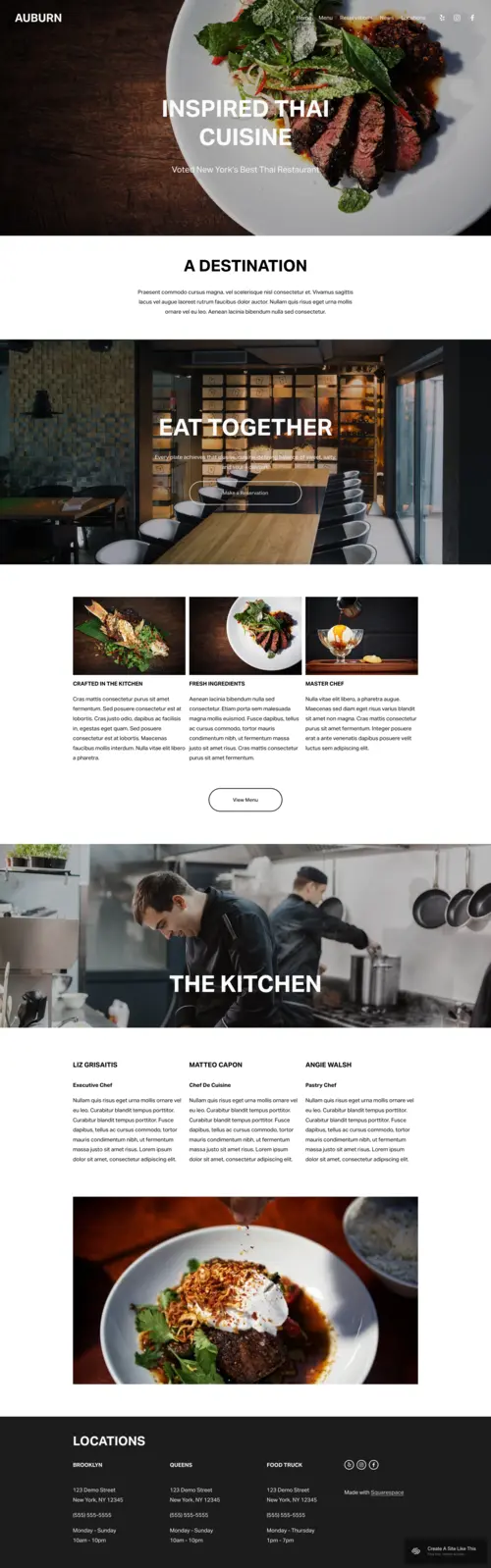
Auburn
Best for Upscale, Fine-Dining & Wedding Catering Services ✓ Pros
- Full-width, mouthwatering food photography paired with minimalist typography creates an immediate fine-dining impression, for upscale catering businesses where the client's first impression sets the value anchor for the entire sales conversation, this design hierarchy is worth more than any amount of copy.
- Team introduction and kitchen showcase sections build the professional credibility that premium catering clients require before making high-value event decisions, putting faces to the team and demonstrating the quality of your preparation process turns abstract trust into concrete conviction.
- Thoughtful, story-forward layout architecture communicates the attention to detail and craft that defines upscale catering, clients commissioning wedding catering or corporate fine dining are buying an experience, and Auburn's design signals from the first scroll that you understand the stakes.
- Service navigation and menu detail presentation are structured for clarity, event planners and corporate clients who visit multiple catering websites in succession reward easy access to proposal information, service scope, and contact details, and Auburn delivers all three without friction.
- Design scalability for complex catering operations, weddings, corporate events, private dining, and seasonal menus can all coexist in Auburn's layout without the site feeling cluttered or the brand positioning feeling diluted.
✗ Cons
- The premium, minimal aesthetic demands an equally premium photography budget, fine-dining catering businesses that rely on smartphone photos or generic stock imagery will find Auburn's quality-signalling design actively undermines the message rather than amplifying it.
- The sophisticated, formal visual tone is designed for upscale positioning, casual catering businesses, street food operators, or high-volume budget caterers will find the template's restraint and elegance creates a mismatch with their actual offer and target client.
- The storytelling depth that makes Auburn powerful for premium brands also requires meaningful written content investment, a polished Auburn site with thin team bios, vague service descriptions, and no clear catering philosophy will perform below what the design architecture is capable of.
Auburn is the catering website template for businesses that understand fine dining starts long before the first course. The full-width photography, the team storytelling sections, the sophisticated minimalism, every design choice communicates the level of care and craft your clients are commissioning when they hire you. For wedding caterers, corporate fine dining specialists, and private event caterers where the fee reflects the experience, Auburn earns that positioning in the first five seconds of a site visit.
How to Choose the Right Squarespace Catering Website Template
Match Your Template's Visual Tone to Your Catering Style
Catering covers a wide spectrum, from backyard BBQ specialists to black-tie gala caterers, and the best catering website template for your business is the one that immediately communicates which part of that spectrum you occupy. Lexington's warm boldness speaks directly to clients seeking casual, flavour-forward catering with personality. Auburn's minimalist sophistication signals the premium fine-dining and wedding catering space. Hemlock's earthy tones position you squarely in the health-conscious and plant-based market. Hester's clean minimalism suits artisan and farm-to-table businesses. Tantillo's energy connects with fun, personality-driven casual catering. Choosing a template that contradicts your actual catering style, launching with an Auburn-level premium aesthetic when you cater backyard barbecues, attracts the wrong enquiries and wastes everyone's time. Match the visual language to your reality, and the right clients will recognise themselves in your site before they've read your menu.
Prioritise Enquiry and Contact Flow Above Everything Else
Unlike direct eCommerce where a customer adds to cart and checks out, catering conversions happen through enquiries, and how easily your website generates those enquiries determines your booking rate as directly as your food quality. Every extra step between "I like what I see" and "I've sent my event details" costs you bookings. For catering businesses with high-touch, consultation-led sales processes (weddings, corporate events, private dining), a simple contact form with a clear prompt ("Tell us about your event") outperforms a complex multi-step booking system. For casual or lower-value catering services, integrating a live booking tool removes friction entirely. Whatever template you choose, map the enquiry journey before you launch, and make sure it takes under three clicks from any page on your site.
Build Your Menu Display Strategy Before Choosing a Template
How you display your menu is as important as the menu itself, and different catering website templates handle menu architecture very differently. Lexington and Tantillo are optimised for bold, visual menu showcases, ideal for food-forward businesses where appetite is the primary conversion driver. Hester's grid layout suits curated, smaller menus where quality and provenance matter more than breadth. Auburn's design supports tiered catering packages and detailed service descriptions that a high-value client needs before making a commission decision. Hemlock and Randi work with focused, clearly presented menu sections rather than comprehensive catalogue displays. Before selecting your template, decide whether you're selling menus (specific dishes that generate appetite) or packages (service tiers with price points), the distinction will point you toward the right layout architecture.
Think About the Quality of Your Food Photography
In catering, photography is not decoration, it's the primary sales tool. Every catering website template reviewed here performs significantly better with professional food photography than with smartphone shots or stock imagery. Before choosing a template based on how the demo looks, honestly assess the photography you have or are willing to invest in. Auburn and Florence-adjacent templates have the most to gain from premium photography and the most to lose from poor imagery, the minimalist design makes visual quality the dominant impression. Lexington and Tantillo are more forgiving with slightly less polished photography because the bold design elements carry some visual weight independently. If professional photography is not in your current budget, start with a simpler template like Hester or Hemlock where the clean design works with fewer, better images rather than a gallery-heavy layout that needs a deep library to perform.
Adding Online Enquiries and Catering Order Forms
One of the most practical additions to any Squarespace catering website is a structured enquiry or order form. Catering clients need to communicate event size, date, location, dietary requirements, and budget before they can get a quote, and a well-designed form captures all of that in a single, professional interaction.
Squarespace's built-in Form Blocks let you create multi-field enquiry forms that send submissions directly to your inbox or a connected email platform. For standard enquiry capture, this works well: add fields for event date, guest count, event type, and a message field for special requirements. Form submissions are also stored in your Squarespace dashboard under Form Results, so you never lose a lead if an email notification misses your inbox.
For catering businesses that need more structure, third-party tools like Jotform or Typeform support conditional logic, allowing your form to show different questions based on whether the enquiry is for a wedding, corporate event, or private party. These embed cleanly into any Squarespace page via a Code Block. Whatever approach you choose, place the enquiry or catering order form prominently, ideally on your homepage below the hero section and as its own dedicated Contact or Book page. The easier it is for a client to send an enquiry, the more enquiries you will receive.
Frequently Asked Questions
What is the best Squarespace template for a catering website?
Can I take catering enquiries and bookings through a Squarespace website?
How should I display my catering menu on a Squarespace website?
How much does a Squarespace catering website cost?
Can I add customer testimonials and event photos to a Squarespace catering website?
Is Squarespace good for catering businesses?
How We Evaluate Templates
Conclusion: Squarespace Catering Website Templates That Turn Visitors Into Enquiries
The right catering website template doesn't just make your food look good, it communicates your brand, attracts the right clients, and makes reaching out feel natural. Lexington fires up bold personalities. Hester serves artisan and farm-to-table businesses with clean confidence. Hemlock connects with health-conscious and vegan catering markets. Tantillo brings energy and personality to casual event catering. Auburn earns the premium positioning that fine-dining and wedding caterers need to win high-value commissions.
Choose the template that matches your catering identity, invest in the food photography that makes it sing, and build an enquiry path that gets out of the way. The best catering websites make clients hungry for your food and confident in your service at the same time, and these five templates are built to do exactly that.
Looking for more inspiration? Check out our picks for small business templates, modern restaurant templates, and events and services templates, each one chosen with the same priority: designs that make a professional first impression and drive the enquiries that grow your business.
* Read the rest of the post and open up an offer